Kenya's Ebola outbreak tally climbed to eight on Sunday after a 49-year-old patient attendant, who had cared for the country's first Ebola victim, tested positive while in quarantine. Health Ministry Director-General Dr. Patrick Amoth confirmed the case, noting that the individual was already under monitoring as a known contact of the initial patient.
The first patient, a 40-year-old Kenyan man, had traveled from Congo via Uganda and arrived in Nairobi on October 3. He was taken to Nairobi Hospital by a relative and died two days later. The new case emerged from the list of 130 contacts—including health workers—identified after his death, with 128 still in quarantine, according to Amoth.

Amoth said that all individuals in quarantine are being tested if they develop symptoms. He added that the other six patients are in stable condition after receiving supportive care. The eighth patient's positive test underscores the effectiveness of the contact tracing and quarantine protocols, which have so far prevented any community transmission.
Ebola is highly contagious and spreads through direct contact with bodily fluids such as blood and vomit, or through contaminated surfaces like bedding and clothing. The current outbreak in Congo has been the deadliest on record, with at least 4,000 deaths since May.
Among those infected are three close relatives of the first patient and three health workers. The health worker cases have raised concerns about hospital safety, but officials stress that all were linked to the index case and were quickly isolated.
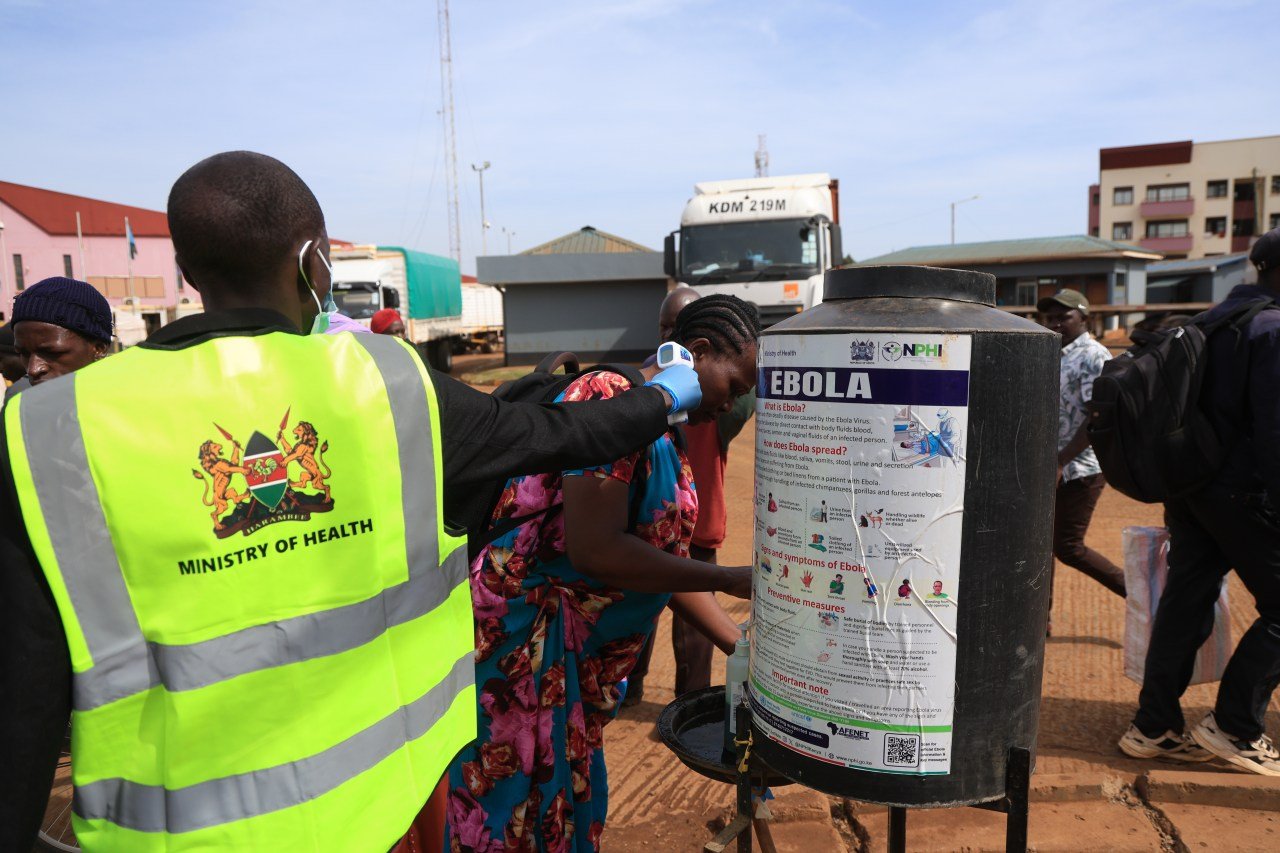
Kenya's first case exposed gaps in border screening, prompting the government to strengthen measures at points of entry. The country has since enhanced screening protocols and set up an emergency hotline for anyone suspecting exposure or showing symptoms. Additionally, Nairobi's main airport now has a dedicated gate for flights arriving from ten countries at the epicenter of the outbreak.
Neighboring Tanzania has also tightened its border controls, introducing mandatory health declarations and a 21-day monitoring period for travelers from high-risk areas. The regional response reflects growing concern about cross-border spread, though Kenya's containment efforts have so far kept the virus from spreading beyond known contacts.
Health officials remain vigilant, but the lack of community transmission is a positive sign. As Amoth noted, the quarantine system is working as intended, catching cases early and preventing wider exposure. The coming weeks will be critical as the monitoring period for remaining contacts continues.
For context on how regional outbreaks are tracked, see our coverage of measles cases hitting 4,410 and Pennsylvania's measles death toll. These cases highlight the importance of robust public health surveillance.