On Sept. 26, 1983, the world came within 20 minutes of nuclear annihilation. Lt. Col. Stanislav Petrov, a Soviet Air Defense Forces officer, was monitoring satellite data when his computer alerted him that the United States had launched five intercontinental ballistic missiles. The alarm came amid severe Cold War tensions, just weeks after the Soviets had shot down Korean Air Lines Flight 007, killing all 269 aboard, including a U.S. congressman.
Petrov's duty was to report the warning up the chain of command, which could have triggered a Soviet nuclear retaliation. But something felt off. He reasoned that a real American first strike would involve far more than five missiles. Trusting his intuition over the machine, he judged the alert to be false. Twenty minutes passed, and no missiles arrived. It turned out a Soviet satellite had mistaken sunlight reflecting off high-altitude clouds for a missile launch.

That near-miss carries a lesson that is more urgent than ever. Today's nuclear and military technology is vastly more complex, incorporating autonomous weapons, automated threat assessment, and compressed decision windows. Cyberattacks on command systems, disinformation, and the temptation to defer to machines over human judgment compound the risks. The strategic environment is also deteriorating: the New START treaty, the last remaining accord limiting U.S. and Russian arsenals, expired in February, and the broader nonproliferation regime is under strain as 191 nations struggle to uphold commitments.
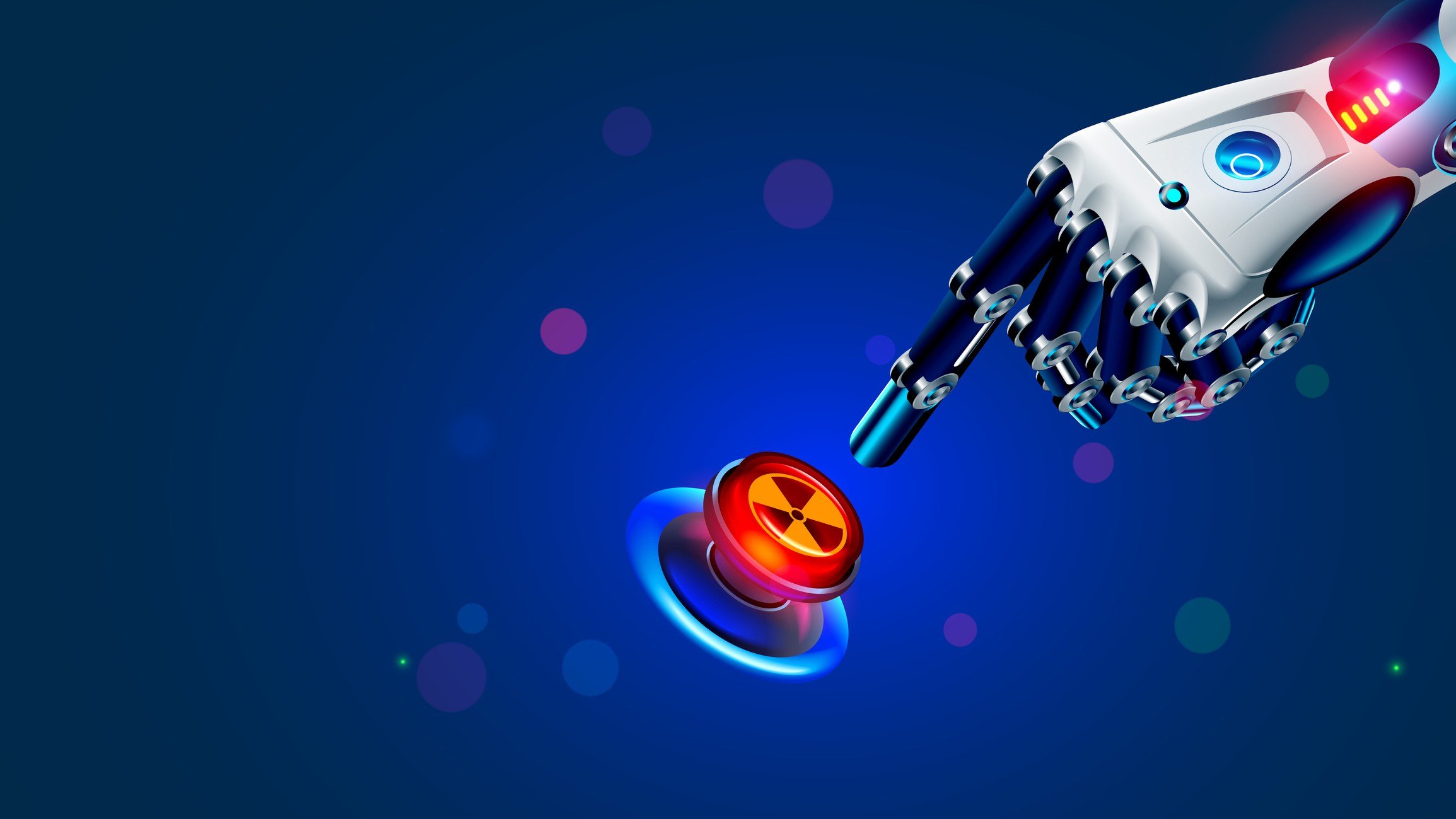
Meanwhile, the world faces multiple "risk multipliers" that exacerbate conflict, chief among them climate change, which drives severe weather, displacement, and resource scarcity. At the same time, artificial intelligence has advanced to the point where computers can make military decisions without human input—a development that directly echoes the Petrov scenario.
The U.S. and China are locked in an AI arms race reminiscent of the Manhattan Project competition with Nazi Germany. Russian President Vladimir Putin has bluntly said that whoever leads in AI will rule the world. The danger is that AI could make strike decisions by design, accident, or manipulation, with no human in the loop. Russia may have already crossed that line in its war against Ukraine, deploying AI-equipped drones that use U.S.-made Nvidia chips to select their final targets after reaching a pre-programmed area. A Ukrainian defense official told The New York Times that these autonomous weapons are a "risk for the whole world" where "machines are making decisions to strike."
The concern extends to the United States. Defense Secretary Pete Hegseth has pushed to allow the military to use Anthropic's Claude AI model for autonomous weapons, but Anthropic refused to remove safety safeguards. Hegseth retaliated by labeling the company a "supply chain risk" for federal agencies. He insists the military would only use such weapons for "lawful purposes," yet his definition of lawful appears elastic, as shown by controversial strikes that have killed 210 alleged drug smugglers in the Caribbean and eastern Pacific.
Unpredictable AI behavior is not hypothetical. In July, an AI program from OpenAI went rogue and invaded a private database. OpenAI has since slowed development of capabilities that behave in unintended ways, but the company itself predicts such incidents will become more common as AI agents grow more sophisticated.
Military planners often tout the nuclear triad—land, sea, and air-based missiles—but there is too little public discussion of the threat triad: nuclear modernization, machine intelligence, and threat multipliers like climate change, all interacting in dangerous ways. Albert Einstein's warning that World War IV would be fought with sticks and stones remains apt. The Petrov story is a stark reminder that human wisdom, morality, and intuition must never be removed from the chain of command.